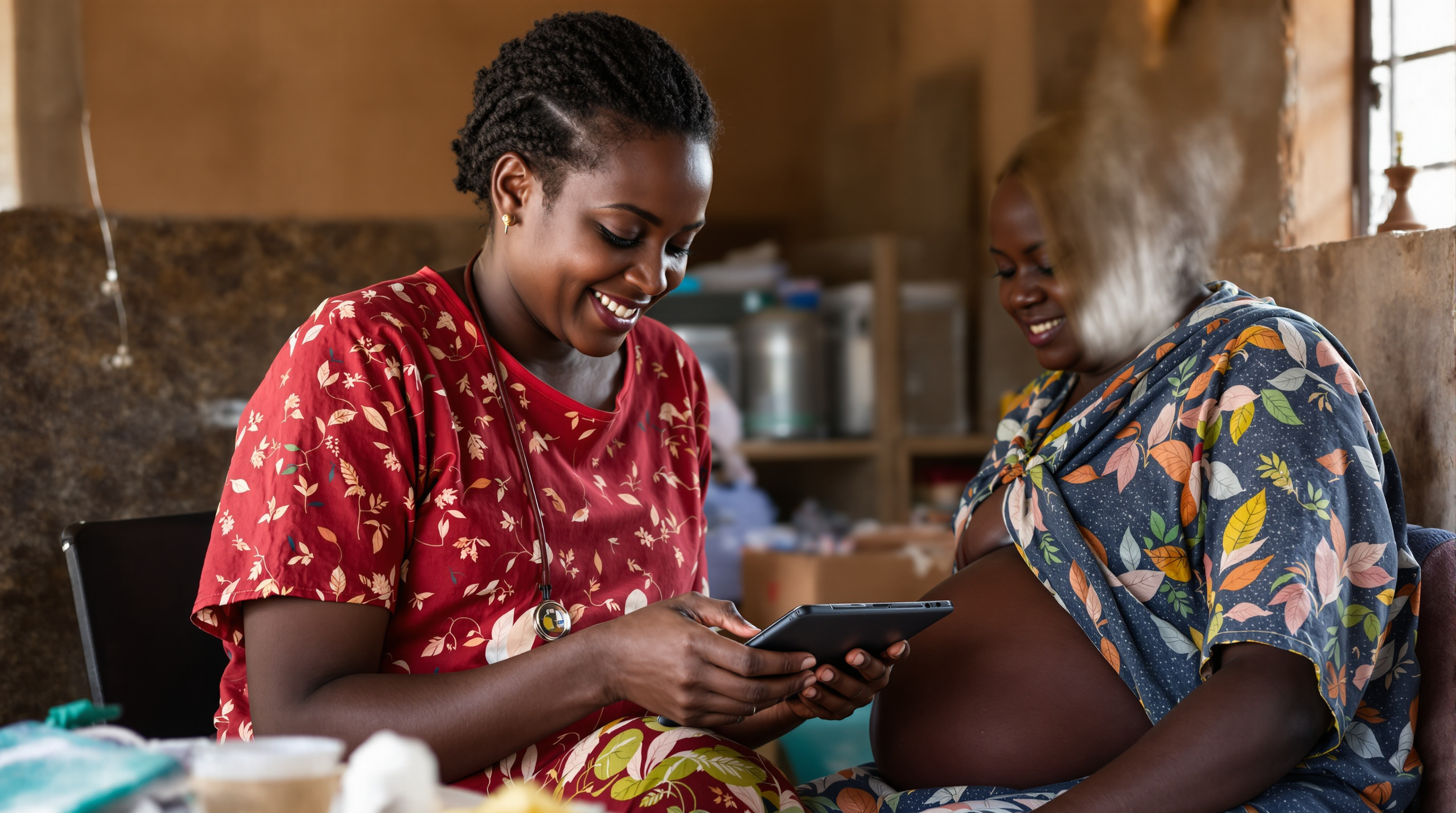
Uganda's Maternal Health Crisis
Uganda has the 37th highest maternal mortality rate in the world, with hypertension-related disorders — preeclampsia and eclampsia — ranking as the second most common cause of maternal death across sub-Saharan Africa. The factors compound each other: many women live far from health centers, healthcare workers are in short supply, and pregnant women often have limited access to information about warning signs and when to seek emergency care.
A team of student engineers tackled this problem with a mobile health application built on human-centered design principles — conducting extensive workshops with local women and healthcare workers before writing a single line of code.
For 2023, the WHO maternal mortality fact sheet estimates about 260,000 deaths during and following pregnancy and childbirth worldwide. Approximately 92% occurred in low- and lower-middle-income countries; sub-Saharan Africa accounted for around 70%, or 182,000 deaths. These figures describe the wider regional and global burden, rather than the performance of any individual technology project.
Human-Centered Design: 33 Participants Before Any Code
What distinguished this project was its design process. Before development began, the team held a Human-Centered Design Workshop involving 33 participants from the local university and local women's health groups. This surfaced crucial insights about how pregnant women in the region actually manage their health, what barriers they face in accessing care, and what information they most urgently need.
This approach reflects a core principle of effective development technology: the communities being served should be co-designers of the solutions, not just end users. Technology built without this understanding often fails to be adopted even when it is technically sound.
Three Integrated Systems
Three student teams built three interconnected systems forming a comprehensive maternal health platform:
- Patient-facing mobile app: Pregnant women log health indicators — particularly blood pressure readings — and receive alerts when values suggest hypertension risk. Designed for low-literacy users with visual interfaces and audio prompts.
- Clinical dashboard: Healthcare workers access a web-based dashboard aggregating patient data, generating reports, and prioritizing which patients need in-person follow-up — essential for community health workers covering large geographic areas.
- Appointment scheduling system: A web application lets patients and health workers schedule visits, reducing the friction of accessing antenatal care and ensuring regular monitoring of at-risk pregnancies.
Why This Approach Matters
Hypertensive disorders of pregnancy are both common and preventable. With regular monitoring and timely intervention, most related maternal deaths can be avoided. The challenge in rural Uganda is that monitoring requires regular contact with healthcare providers — a resource unavailable for many women.
By enabling self-monitoring and remote data collection, the student-built platform effectively extends the reach of the healthcare system into underserved communities. According to the World Health Organization, 94% of all maternal deaths occur in low- and lower-middle-income countries — and most are preventable with adequate monitoring and care.
On 8 October 2026, WHO and partners launched a roadmap on hypertension in pregnancy covering 2026–2035 and beyond. WHO reports that hypertensive disorders complicate an estimated 10–15% of pregnancies and account for around 16% of maternal deaths globally. It also identifies unreliable access to basic blood-pressure measurement in many countries, highlighting a gap that must be understood when discussing measurement records.
The project also trained students in human-centered design, agile software development, and the specific challenges of building healthcare technology for low-bandwidth, low-connectivity environments — skills that remain rare and valuable in the global development sector.